
Saipem’s major technological challenges, told up close
Saipem’s engineering challenges, told by Geopop: a collaboration that brings together industrial expertise and scientific communication to make complex topics easier to understand and bring more people closer to the major technological challenges at sea.
Underwater drones in action
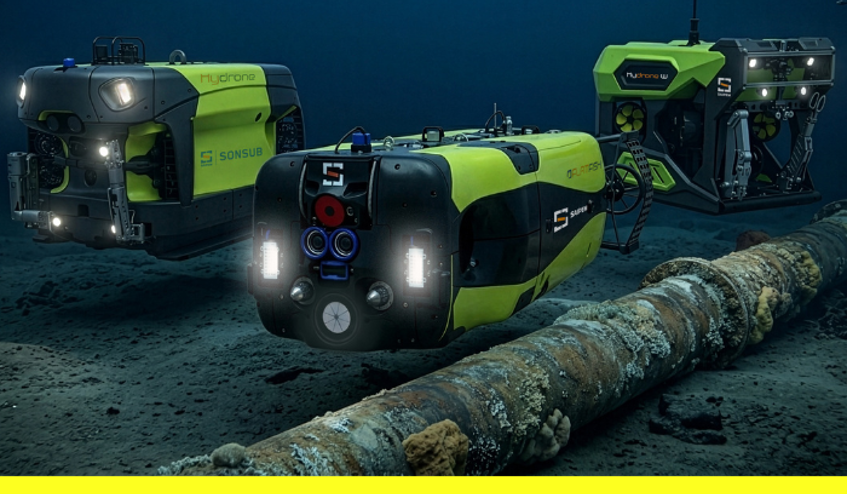
Robots capable of operating for months in complete darkness at depths of up to 3,000 meters. This is not science fiction: it’s the new frontier of underwater drones developed by Saipem. Geopop takes us through Saipem’s drone fleet, with simulations, testings, and extreme missions on the ocean floor, where precision, autonomy, and artificial intelligence allow to explore some of the most mysterious parts of our planet and protect invisible but strategic infrastructures.
Did you know…
There are no power outlets on the seabed, yet these drones can operate for long periods without human intervention. The secret? A station installed directly on the ocean floor, where the drone autonomously positions itself to recharge and download inspections data, just like a smartphone with wireless charging — but at thousands of meters below sea level.
How is it possible to extract gas and oil hundreds of meters below sea level?
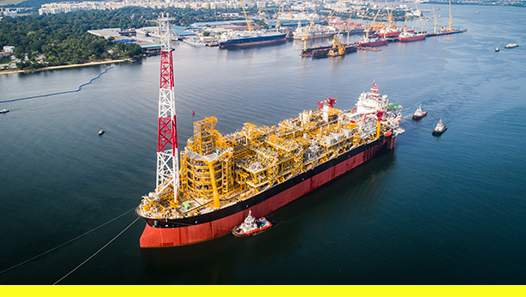
Geopop takes us on a journey to discover FPSOs—floating production, storage and offloading units designed to operate where traditional platforms cannot. Structures that may look like ships, but are in fact full-scale floating industrial plants, essential for the extraction and processing of gas and oil in deep and ultra-deep waters.
Did you know…
To maintain the vessel’s stability during operations—especially as the onboard load changes—FPSOs use ballast tanks, which are tanks located within the hull. When the vessel is unloaded, these tanks are filled with seawater; as gas or oil is stored onboard, the water is gradually discharged to keep the vessel stable and properly balanced.
How to drill a gas well 12,000 metres deep
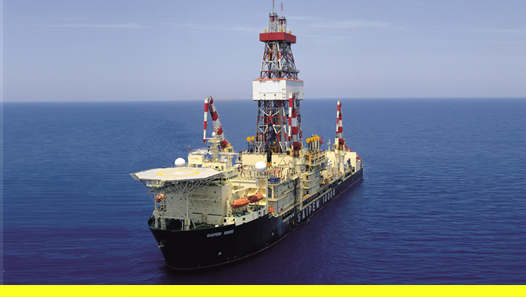
Geopop goes on board the Saipem 10000, a drilling vessel capable of reaching depths of up to 12 kilometres to extract natural gas from beneath the seabed, to discover how the large-scale drilling system works and how such extreme depths can be reached safely.
Did you know…
The name Saipem 10000 is no coincidence: the vessel can operate in water depths of up to 10,000 feet. It drills through about 3 kilometres of water to reach the seabed, and then continues for another 9 kilometres below it—making a total vertical drilling depth of 12 kilometres.
Find out more about the fifth-generation ultra-deepwater drilling vessel Saipem 10000
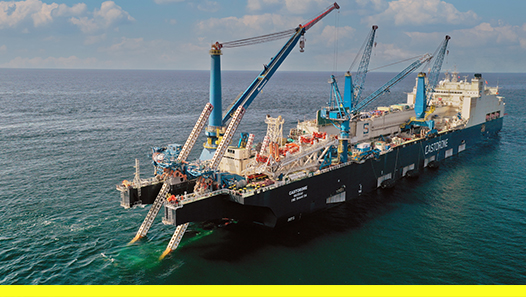
Discovering the vessel that lays gas pipelines at sea, down to depths of 3,000 metres
Geopop goes on board Castorone to discover how one of the largest pipelaying vessels in the world operates. A journey through the assembly and installation of pipelines on the seabed, all the way to the control room where operations are managed—even in challenging weather conditions.